
Perspectives on Early Childhood Psychology and Education
The Perspectives on Early Childhood Psychology and Education is devoted entirely to the scholarly criticism of its respective field.
Available Volumes
Perspectives on Early Childhood Psychology and Education 9.1
Perspectives on Early Childhood Psychology and Education publishes original contributions for a broad range of psychological and educational perspectives relevant to infants, young children, families, and caregivers.
Perspectives on Early Childhood Psychology And Education 8.1
Perspectives on Early Childhood Psychology and Education publishes original contributions for a broad range of psychological and educational perspectives relevant to infants, young children, families, and caregivers.
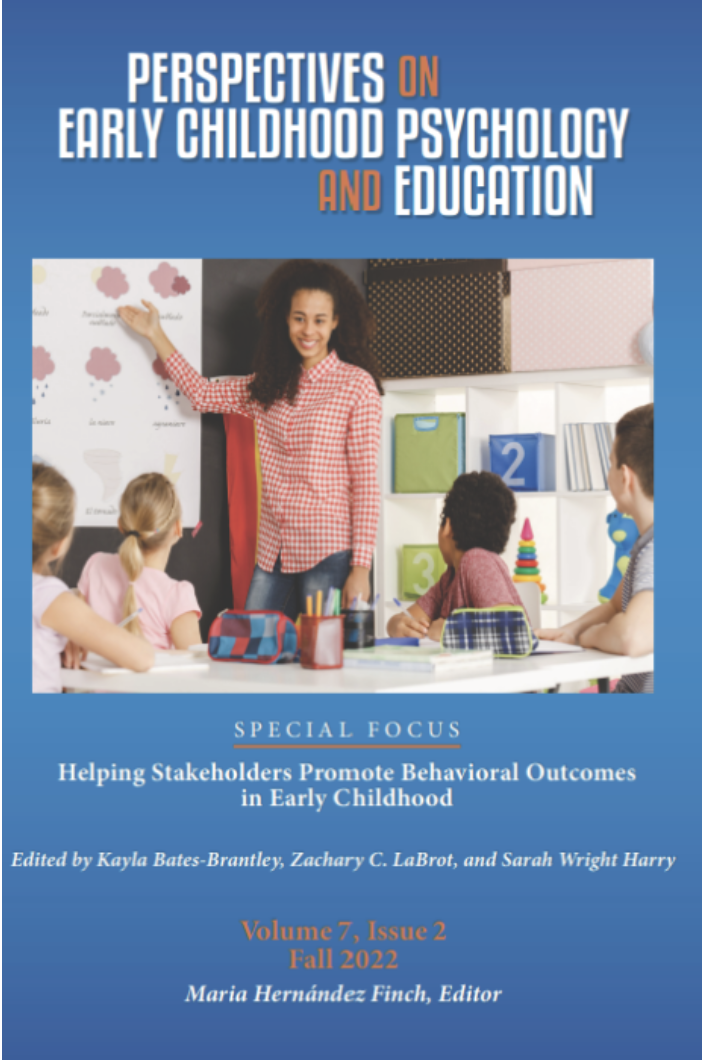
Perspectives on Early Childhood Psychology And Education 7.2
The latest edition of Perspectives on Early Childhood Psychology and Education focuses on promoting positive outcomes in early childhood. This special issue includes articles on classroom management and reading skills interventions. It also discusses interdisciplinary practices and features the Behavior Analytic Multitiered Consultation Model for Early Childhood Educators. Ideal for trainers and researchers, this issue has practical information for everyone.
Perspectives on Early Childhood Psychology And Education 7.1
Perspectives on Early Childhood Psychology and Education publishes original contributions for a broad range of psychological and educational perspectives relevant to infants, young children (to age 8), families, and caregivers. Journal articles incorporate evidence-based research, theory, and practice-within clinical, community, developmental, neurological, and school psychology perspectives. The journal accepts test and book reviews, literature reviews, program descriptions and evaluations, clinical studies, and other professional materials of interest to psychologists and educators working with young children.
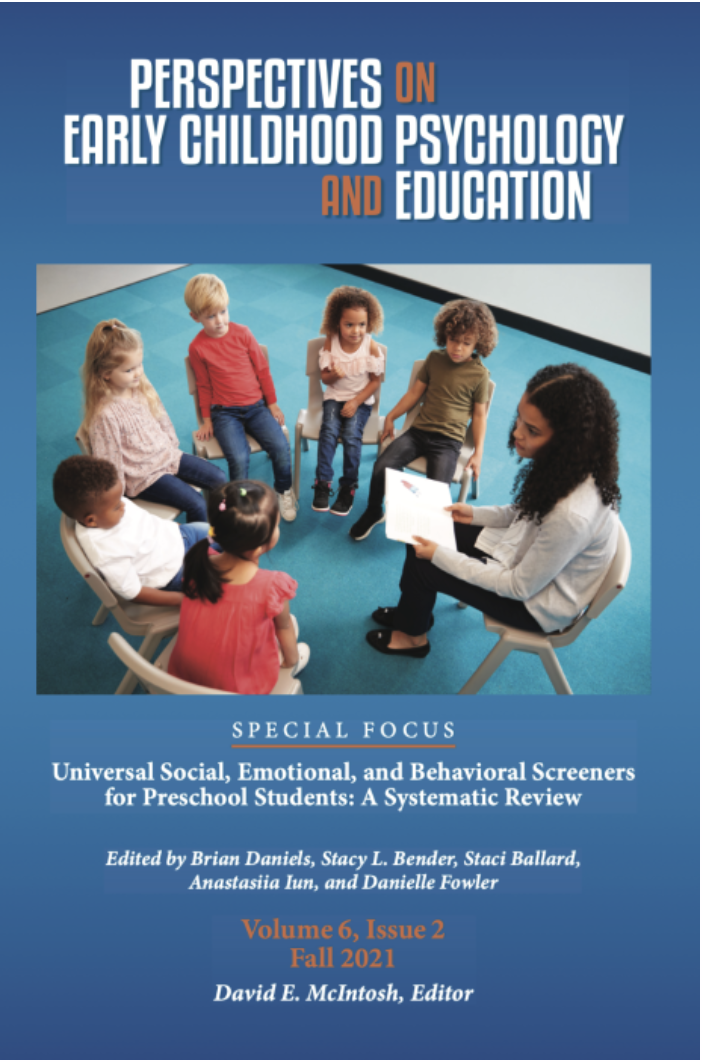
Perspectives on Early Childhood Psychology and Education 6.2
Perspectives on Early Childhood Psychology and Education publishes original contributions for a broad range of psychological and educational perspectives relevant to infants, young children, families, and caregivers. Volume 6.2’s special focus is “Promoting Mental Health and Positive Well-Being Early Childhood: Delineating the Critical Role of School.” This volume features articles on the importance of student support systems within public schools. Drawing on also several bodies of research, guest editors Dr. Timothy Hanchon and Dr. Kristin Scardamalia emphasize the need for conversations that tackle classroom management. This special issue focuses on the importance of student support systems within public schools. Drawing on several bodies of research, guest editors Dr. Timothy Hanchon and Dr. Kristin Scardamalia emphasize the need for conversations that tackle classroom management.
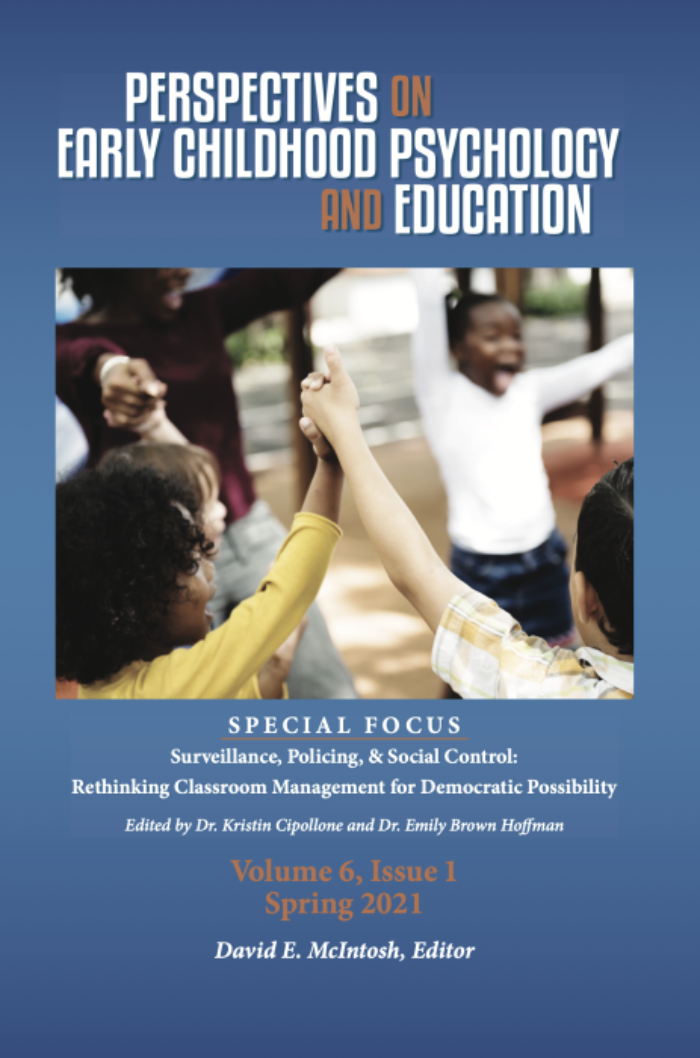
Perspectives on Early Childhood Psychology and Education 6.1
Perspectives on Early Childhood Psychology and Education publishes original contributions for a broad range of psychological and educational perspectives relevant to infants, young children, families, and caregivers. Volume 6.1’s special focus is “Surveillance, Policing, & Social Control: Rethinking Classroom Management for Democratic Possibility.” This volume features articles on racial inequality in discipline, the hidden curriculum of social-emotional learning, and creating identity-affirming space for Black youth. The special focus for Volume 6, Issue 1 is “Surveillance, Policing, & Social Control: Rethinking Classroom Management for Democratic Possibility.” This volume features articles on racial inequality in discipline, the hidden curriculum of social-emotional learning, and creating identity-affirming space for Black Youth.
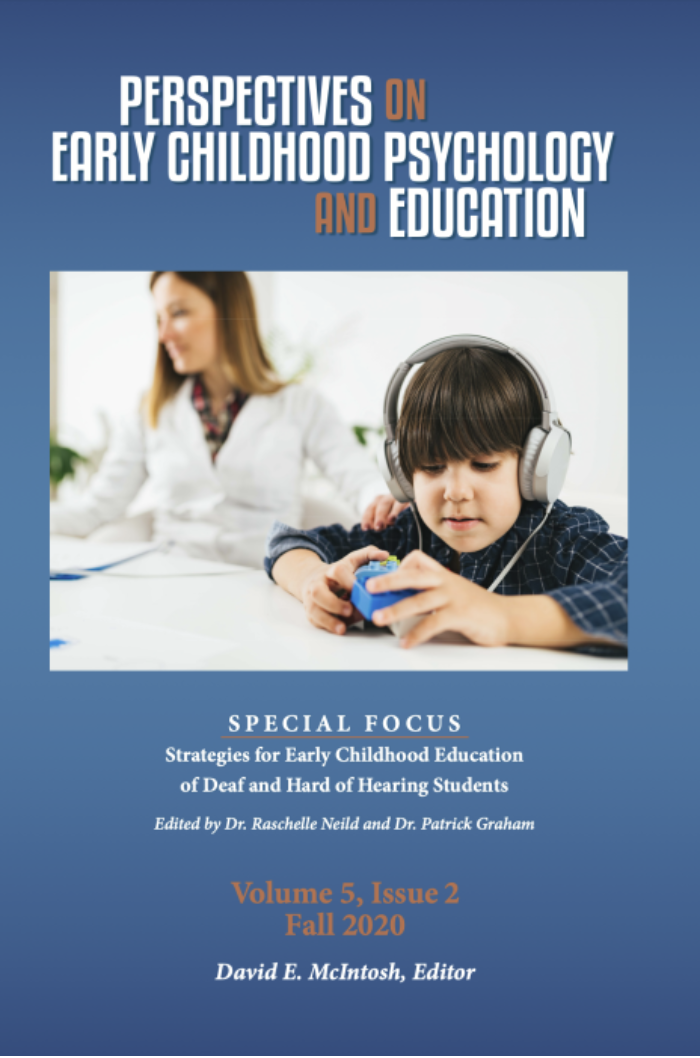
Perspectives on Early Childhood Psychology and Education 5.2
Perspectives on Early Childhood Psychology and Education publishes original contributions for a broad range of psychological and educational perspectives relevant to infants, young children (to age 8), families, and caregivers. Journal articles incorporate evidence-based research, theory, and practice-within clinical, community, developmental, neurological, and school psychology perspectives. The journal accepts test and book reviews, literature reviews, program descriptions and evaluations, clinical studies, and other professional materials of interest to psychologists and educators working with young children. Volume 5.2 features research on the methods and strategies for educating deaf students.
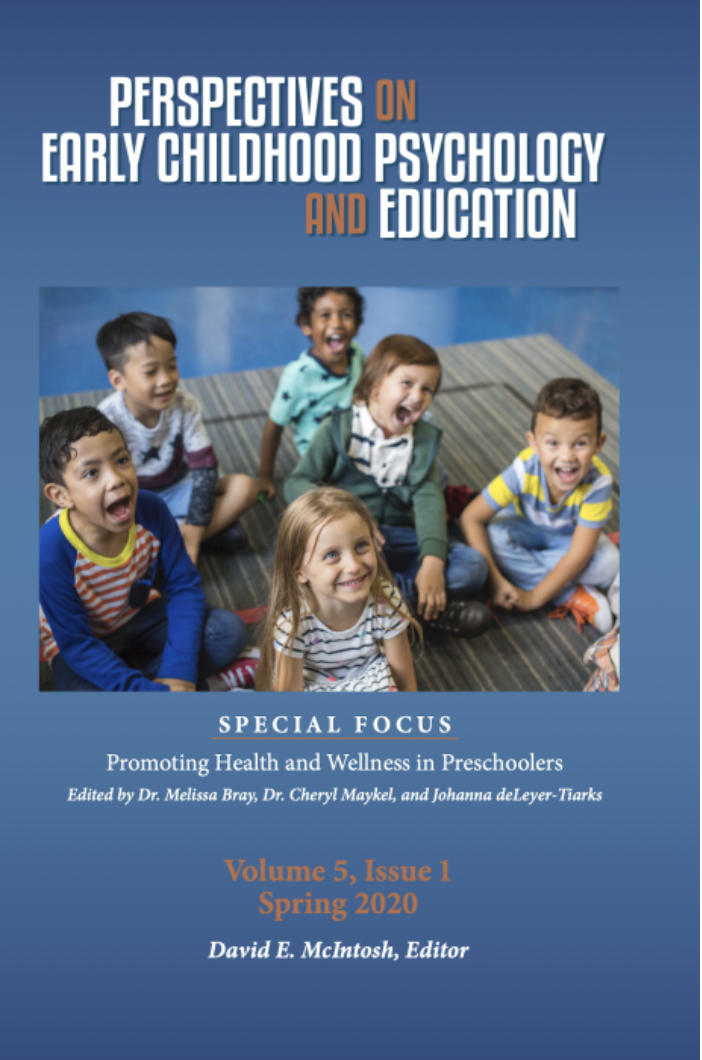
Perspectives on Early Childhood Psychology and Education 5.1
Perspectives on Early Childhood Psychology and Education publishes original contributions for a broad range of psychological and educational perspectives relevant to infants, young children, families, and caregivers. Volume 5, Issue 1 features research on promoting health and wellness in preschool education. In addition to general articles, this issue features a special focus section on Promoting Health and Wellness in Preschoolers. Special Focus Editors (Promoting Health and Wellness in Preschoolers): Melissa Bray, Cheryl Maykel, and Johanna deLeyer-Tiarks
Perspectives on Early Childhood Psychology and Education 4.2
Perspectives on Early Childhood Psychology and Education publishes original contributions for a broad range of psychological and educational perspectives relevant to infants, young children, families, and caregivers. Volume 4, Issue 2 looks at conceptualizing perfectionism in early childhood through the lens of perfectionism research of children and adolescents. In addition to general articles, this issue features a special focus section on Conceptualizing Perfectionism in Early Childhood Through the Lens of Perfectionism Research in Children and Adolescents. Special Focus Editor (Conceptualizing Perfectionism in Early Childhood): Kathryn L. Fletcher
Perspectives on Early Childhood Psychology and Education 4.1
Perspectives focus on a broad range of psychological and educational perspectives related to infants, young children, families, and caregivers. In this new volume, look for articles about children’s adjustments and readiness for kindergarten, and inclusive playground designs. This issue contains articles about the assessment of Attention Deficit Hyperactivity Disorder in early childhood; the role of mother-child emotional availability in children's adjustment to Kindergarten; the design of inclusive playgrounds; and reviews of a Kindergarten Readiness Assessment, the Bayley Scales of Infant Development, and the Stanford-Binet Intelligence Scales.
Perspectives on Early Childhood Psychology and Education 3.2
Perspectives on Early Childhood Psychology and Education publishes original contributions for a broad range of psychological and educational perspectives relevant to infants, young children (to age 8), families, and caregivers. Journal articles incorporate evidence-based research, theory, and practice-within clinical, community, developmental, neurological, and school psychology perspectives. The journal accepts test and book reviews, literature reviews, program descriptions and evaluations, clinical studies, and other professional materials of interest to psychologists and educators working with young children.
Perspectives on Early Childhood Psychology and Education 3.1
Perspectives on Early Childhood Psychology and Education publishes original contributions for a broad range of psychological and educational perspectives relevant to infants, young children (to age 8), families, and caregivers. Journal articles incorporate evidence-based research, theory, and practice-within clinical, community, developmental, neurological, and school psychology perspectives. The journal accepts test and book reviews, literature reviews, program descriptions and evaluations, clinical studies, and other professional materials of interest to psychologists and educators working with young children.
Perspectives on Early Childhood Psychology and Education 2.2
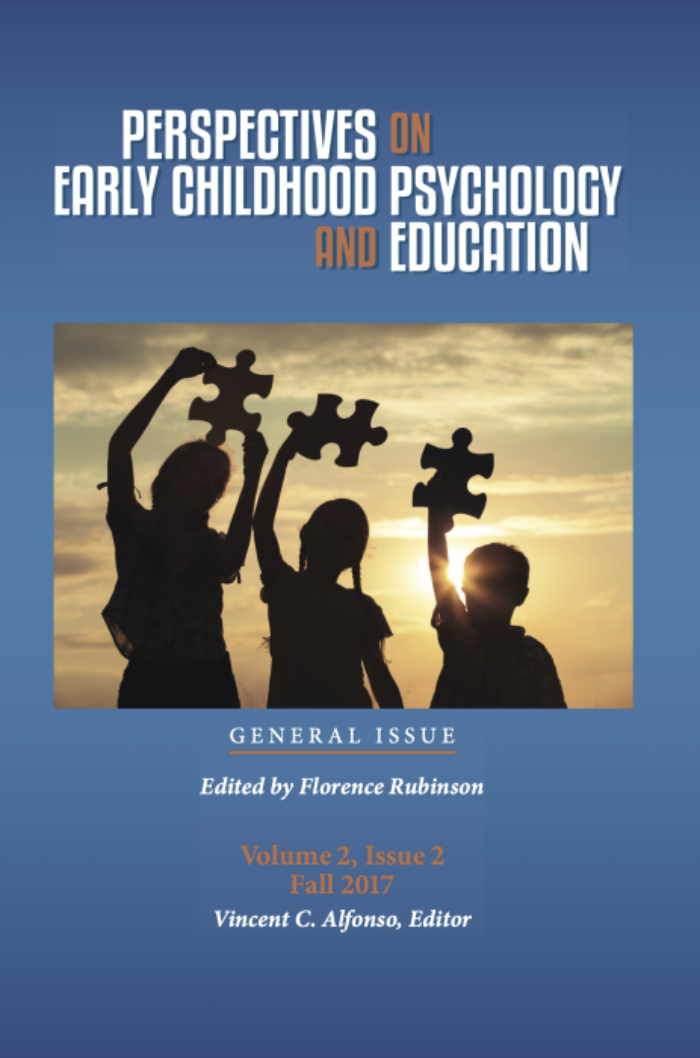
PECPE, edited by Dr. Victor C. Alfonso, with Dr. Florence Rubinson as guest editor for this issue, is a psychological and educational journal that focuses on publishing original contributions from a broad range of psychological and educational perspectives relevant to infants, young children (up to 8 years old), families, and caregivers. Along with articles incorporating evidence-based research, theory, and practice within clinical, community, developmental, neurological, and school psychology perspectives, PECPE also publishes book, literature, and test reviews, program descriptions, and other materials of interest to psychologists and professionals who work with and educate young children and their caregivers. This general issue touches on gender nonconformity and identity, paternal impact on child development and skill acquisition, and how children adapt to kindergarten, according to kindergarten teachers. Articles include “Gender Nonconformity and Gender Identity: Resources for Early Childhood Educators” by Amy E. Tiberi and Tammy L. Hughes and “Old Roads, New Paths: Men’s Childhood Relationships with Their Fathers and Their Current Parenting” by Karen E. McFadden, Jacqueline D. Shannon, and Catherine Tamis-LeMonda
Perspectives on Early Childhood Psychology and Education 2.1
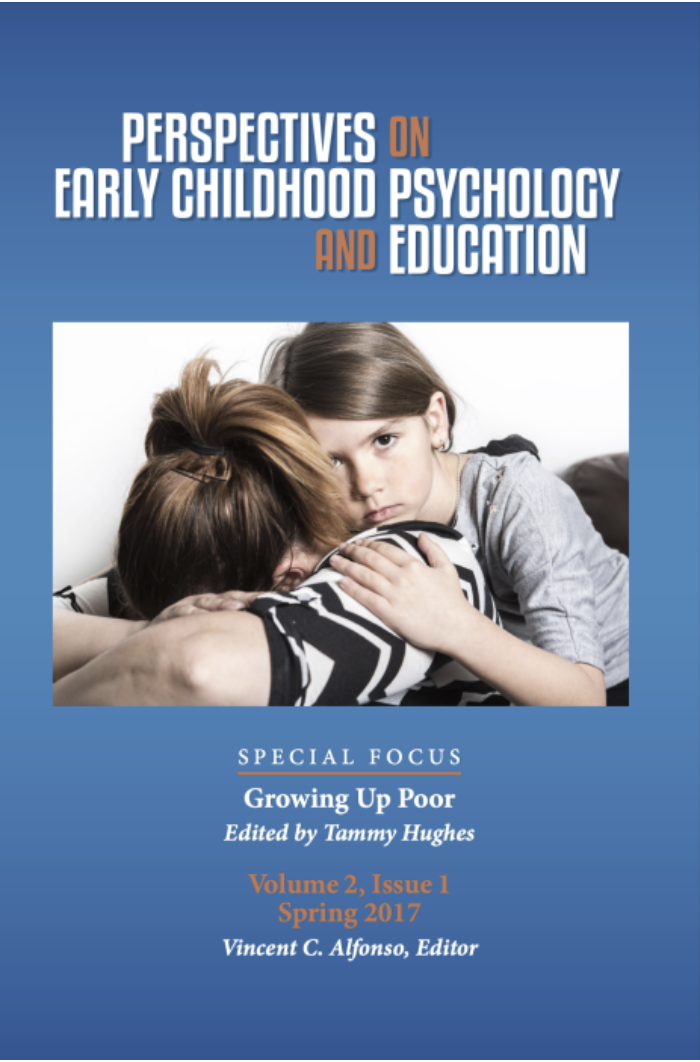
Growing Up Poor: The Negative Sequelae on Child Development "In 2015, the U.S. Census Bureau reported that nearly 15.5 million children and adolescents in the United States live in families with incomes below the federal poverty threshold. While child poverty rates slightly decreased between 2013 and 2014, the 2016 State of the Union revealed that the United States, in comparison to its peer countries (e.g., Australia, Canada, Czech Republic, Denmark, Estonia, Finland, France, Germany, Greece, Iceland, Ireland, Italy, Luxembourg, Netherlands, Norway, Poland, Slovak Republic, Slovenia, Spain, and the United Kingdom), was an outlier on many measures of inequality. For example, the United States has high levels of income disparity and wealth imbalance, as well as unusually high levels of poverty. Further, the extent of imbalance of inequality in the United States can have extremely detrimental effects on one of its most vulnerable subgroups of the population: children."
Perspectives on Early Childhood Psychology and Education 1.2
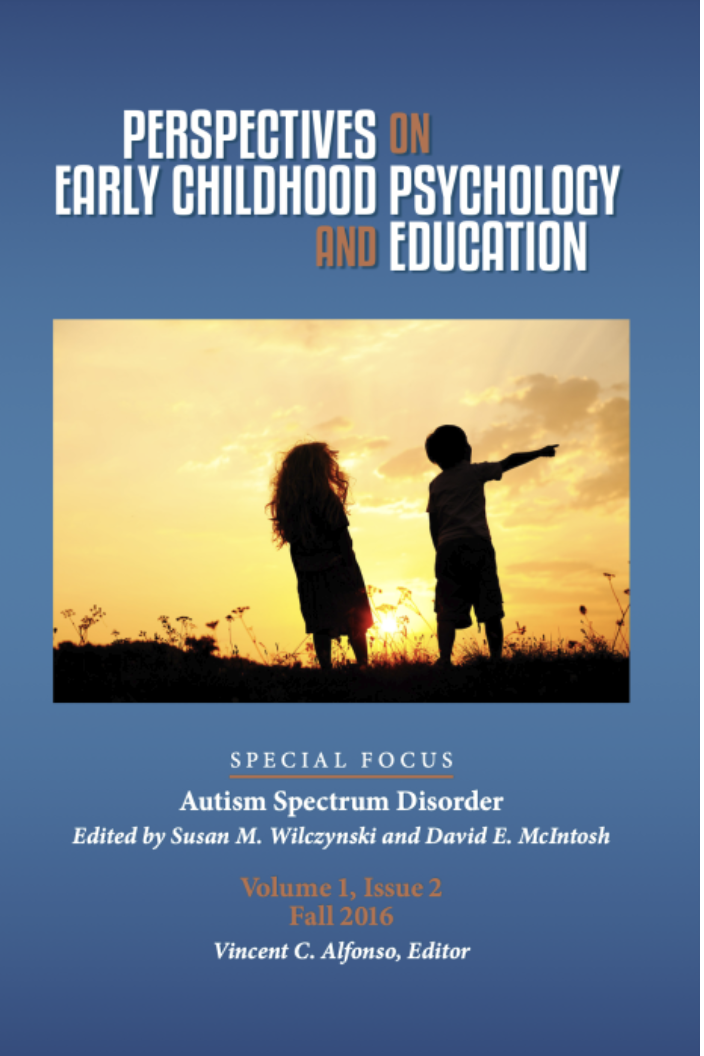
This issue’s special focus is on autism spectrum disorder (ASD): Exploring the Need for a Multidisciplinary & Collaborative Approach. Early childhood ASD is multifaceted and requires complex thinking on the part of all who work with children. Articles explore the need for practitioners to understand the evidence supporting different treatment options and how professionals representing diverse disciplines, must work with parents to identify optimal treatments for each child. Also included in this issue is “A Review of Agency Websites Offering ABA Services in the Midwestern US.”
Perspectives on Early Childhood Psychology And Education 1.1
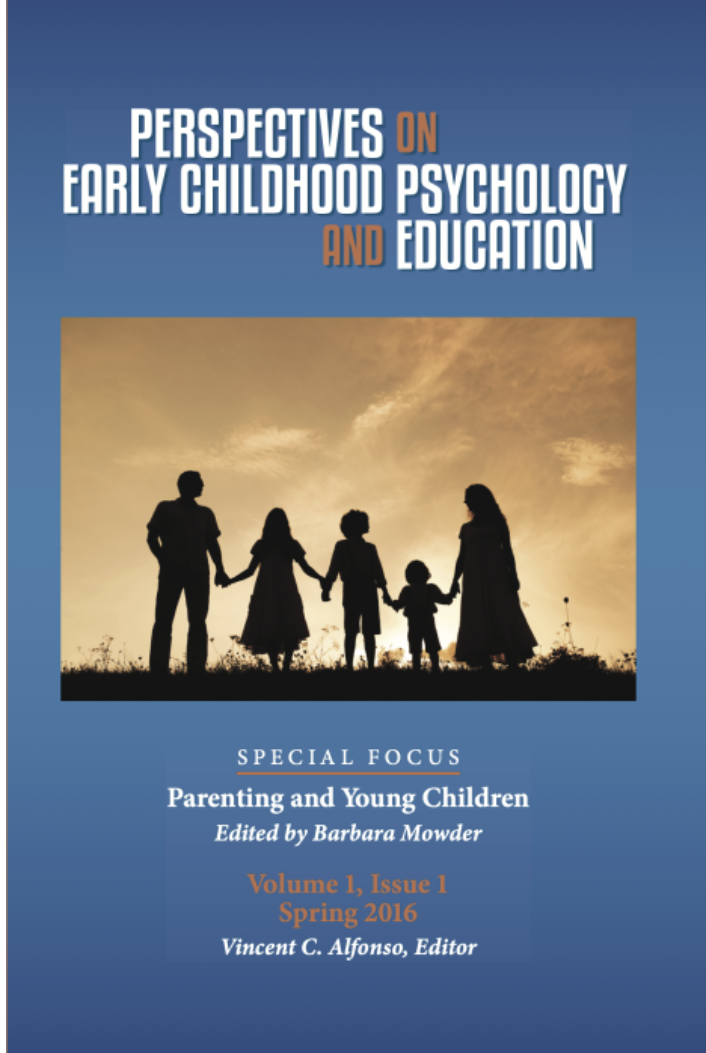
Perspectives on Early Childhood Psychology and Education publishes original contributions for a broad range of psychological and educational perspectives relevant to infants, young children (to age 8), families, and caregivers. Journal articles incorporate evidence-based research, theory, and practice-within clinical, community, developmental, neurological, and school psychology perspectives. The journal accepts test and book reviews, literature reviews, program descriptions and evaluations, clinical studies, and other professional materials of interest to psychologists and educators working with young children.